Blog
The Room Is Always Teaching
How training partners, status, tolerated behavior, and coach reactions shape the real culture of a BJJ, Muay Thai, or MMA gym.
Benjamin Westrich · August 4, 2026
The Room Is Always Teaching
A new student can forget every name from the first week and still learn the room accurately.
They learn who gets picked first. They notice which upper belts make space for beginners and which ones suddenly need to retape a finger when an unfamiliar partner walks over. They see whether hard rounds end with a handshake or an excuse. They watch the coach respond when somebody ignores a tap, talks over instruction, or helps a struggling partner without being asked.
Nobody has to explain what any of this means. The student starts building a map.
Every martial arts gym has a formal curriculum. In Brazilian Jiu-Jitsu, that curriculum may move from escapes and control to submissions and live application. In Muay Thai, it may move from stance and defense to combinations, partner work, and rounds. Coaches choose the sequence, explain the details, and decide what gets practiced.
The room is running another curriculum at the same time.
It teaches what kind of person earns respect. It teaches whether “technical” actually means technical. It teaches whether asking a question is normal or embarrassing. It teaches whether the rules apply to everyone. That curriculum is rarely written down, but people study it closely because it tells them how to belong.
The lesson continues after the coach stops talking
Most coaches have said some version of “take care of your partner.” The sentence matters. What happens during the next twenty minutes matters more.
If an experienced student gives a beginner the right amount of resistance, allows time to work through the movement, and then adds difficulty as understanding improves, the room has defined partnership in practical terms. If another student turns the same drill into a contest and nobody addresses it, the room has defined partnership too.
People learn from the gap between instruction and experience.
This is especially important in combat sports because so much authority is delegated during practice. A coach cannot control every grip, pad angle, scramble, and decision in a room full of pairs. Every member temporarily holds someone else’s safety and development in their hands. The quality of the class depends on hundreds of decisions that never reach the coach’s direct attention.
The informal curriculum answers the questions people may never ask aloud:
- Can I tell a partner about an injury without being treated as fragile?
- Is tapping treated as useful information or a public loss?
- Does winning a round excuse poor control?
- Will anyone help me if I do not understand the drill?
- What happens when an experienced student behaves badly?
Those answers become expectations. Expectations become behavior. Before long, behavior starts to feel like personality: “That is just how people train here.”
It did not begin as personality. The room taught it.
Pairing is part of the curriculum
Pairing looks like logistics until you watch what it produces.
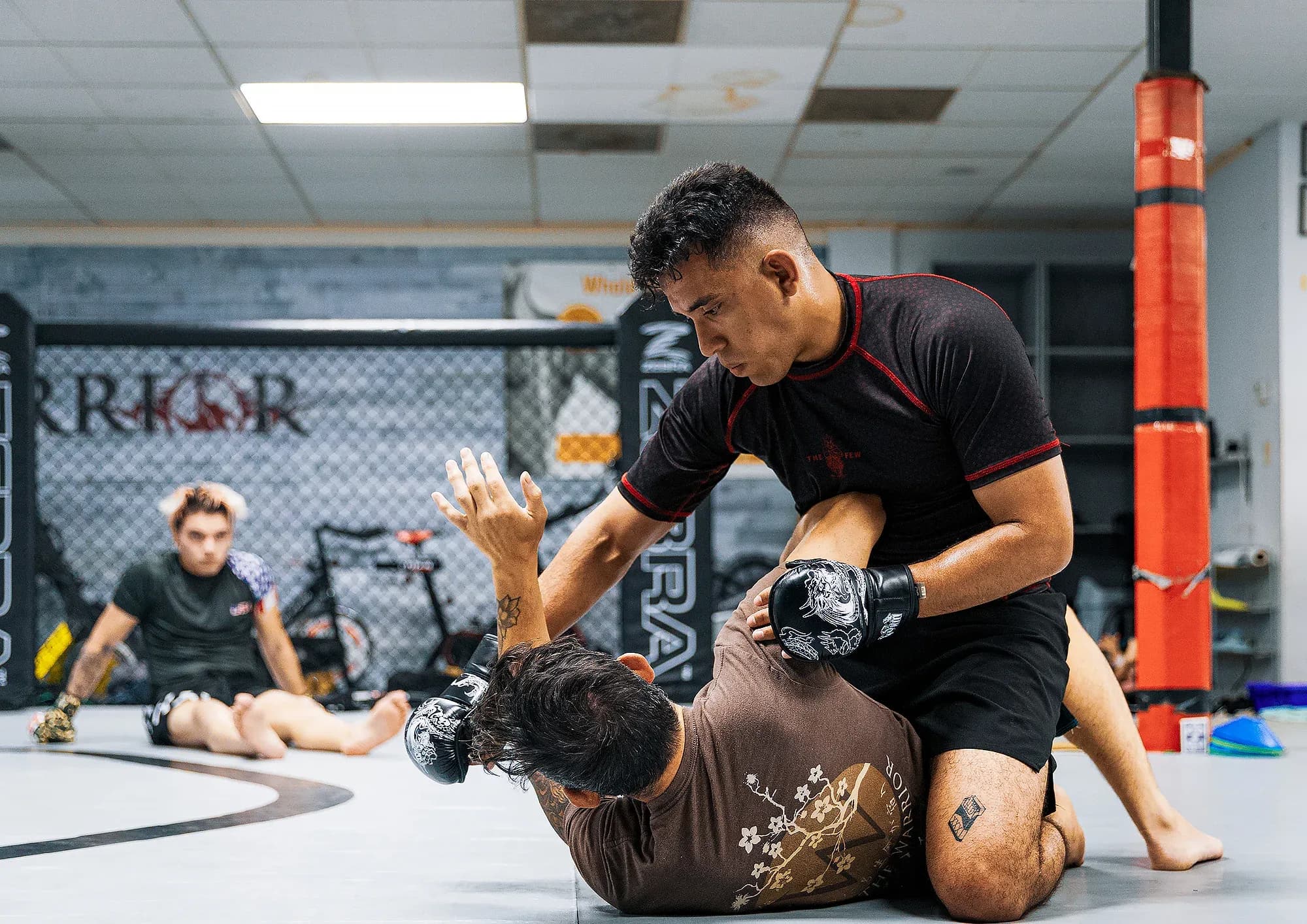
Put every new student with whoever happens to be standing nearby and chance will design part of the onboarding. One beginner may land with a patient partner who explains the pace, offers useful resistance, and makes the first class manageable. Another may land with someone who is bored, overeager, or desperate to establish rank. Both students attended the same class. They did not receive the same education.
Deliberate pairing does more than reduce obvious safety problems. It transfers judgment.
An experienced student can show a beginner when to reset, how firmly to hold pads, what “light” contact feels like, and how to ask for a different pace. A careful heavyweight can demonstrate that size creates responsibility. A good competitor can show that hard work and emotional control belong together. These lessons are delivered through ordinary rounds, which makes them more convincing than a poster on the wall.
Pairing also signals who the gym considers worth investing in. If upper belts only work with people near their own level, beginners learn that advancement means gaining permission to ignore the next group behind them. If experienced students regularly help newer members and still receive serious rounds of their own, the room teaches a different version of status.
This does not require turning every advanced student into unpaid staff. Upper belts need training that serves their goals. Competitors need appropriate partners and intensity. But a room where nobody can ever train down a level has confused individual consumption with team development.
Training partners determine the quality of most repetitions. Pairing decides who gets access to that quality and who learns to provide it.
Status turns behavior into permission
People copy high-status members more readily than they copy a rule.
In a martial arts gym, status comes from several places. Rank matters. Competitive success matters. Coaching access, physical ability, confidence, and time in the room matter. Some of that status is earned and useful. We want skilled people to have influence.
The problem begins when technical credibility spills into moral exemption.
If the best fighter arrives late, interrupts instruction, and rolls their eyes at beginners, the behavior carries more weight than it would from a first-week student. Other members may not imitate each act directly. They absorb the larger lesson: enough performance buys freedom from ordinary obligations.
The opposite is also true. When a respected upper belt chooses the nervous new student, cleans up without ceremony, or calmly resets a round that is getting reckless, the act changes what responsibility looks like. It becomes a sign of competence instead of a chore assigned to people with low status.
This is one reason what a BJJ belt signals matters beyond technique. Rank does not create character. It does create visibility. The higher someone rises, the more their small choices become evidence about what the room admires.
Coaches have to account for that multiplier. Correcting a white belt while ignoring the same behavior from a successful competitor is worse than inconsistency between two individuals. It teaches everyone watching that standards are arranged by status.
Tolerance is a lesson, even without approval
Gym owners sometimes defend a recurring problem by saying, “We do not encourage that.”
That may be true. It may also be irrelevant.
There is a difference between what a room praises and what it permits. Members pay attention to both. If somebody repeatedly uses new students as practice dummies, pressures injured partners to keep going, or turns every disagreement into drama, silence becomes part of the education. The room learns that the behavior falls within the workable range.
Nobody needs to announce a new standard. Repetition does the work.
This is how small cultural problems become difficult ones. At first, people recognize the behavior as unusual. Then they develop workarounds. Certain members avoid the person. Others warn friends quietly. Coaches manage the pairing chart around them. Eventually the workaround feels normal and the original question disappears: Why is everyone else responsible for absorbing the cost of one person’s behavior?
The clearest written values cannot compete with a visible exception that appears every night.
In why incentives shape gym culture more than values do, I argued that people learn what the system rewards. Tolerance works like a reward when it allows someone to keep the rounds, status, attention, and access they value. The absence of a consequence is still information.
Coach reactions complete the lesson
The original behavior is only half the event. The coach’s response tells the room how to interpret it.
Consider a hard grappling round that drifts into anger. One student applies pressure, the other responds with a late shove, and both stand up irritated. A coach can ignore it, publicly humiliate both people, or stop the round, separate the heat from the useful training, and deal with the behavior directly. Each response teaches something different about conflict.
Ignoring it teaches that emotional control is optional until somebody gets hurt. Public humiliation teaches that admitting a problem is dangerous. A calm, proportionate response teaches that hard training belongs here and losing control has to be corrected.
The timing matters. Small corrections made early are cheaper for everyone. “Slow the finish down.” “Give them room to work.” “That contact is too heavy for this drill.” These sentences keep a normal mistake from becoming an identity contest. They also give members language they can use with each other.
When coaches wait until they are furious, the room learns that standards only appear during explosions. Members either stay silent or start policing one another with the same unnecessary heat.
A good coaching response is clear enough for the people involved and legible enough for the room. That does not mean every correction needs an audience. Most should be private. People still notice whether the pattern changes, whether the rule is applied consistently, and whether reporting a concern leads to retaliation or resolution.
A hard room needs an accurate curriculum
None of this requires a soft training environment.
Combat sports involve pressure, fatigue, contact, failed attempts, and rounds that expose weaknesses we would rather hide. Serious students need partners who can push them. Competitors need training that prepares them for opponents who have no interest in being cooperative.
The room has to teach the difference between intensity and disorder.
Intensity has a purpose. It can be raised and lowered. Partners understand the task, respect the boundaries, and remain responsible for their choices. Disorder is when the purpose disappears and the round becomes a contest over ego, status, or retaliation. Both can feel hard. Only one reliably makes the room better.
A culture that protects beginners, respects taps, and corrects reckless behavior is not lowering the standard. It is creating the trust required for difficult training. People can work harder when they do not have to spend attention protecting themselves from preventable nonsense.
That trust also makes honest feedback possible. A student who can say “I lost the position because I panicked” has something to work on. A student who has to say “everything is fine” to preserve status loses the information the round was supposed to provide.
Audit what the room taught this week
Culture can become vague when we discuss it only through words like respect, family, and discipline. The informal curriculum is easier to see if we look at specific events.
For one week, pay attention to four things.
Watch the pairings. Who receives the best partners? Who is regularly left to chance? Who teaches judgment through the way they work?
Watch status. Which behaviors earn attention and approval? What do the most influential members make look normal?
Watch tolerance. Which recurring problems have become something everyone quietly works around?
Watch coach reactions. Are corrections early, proportionate, and consistent? Does the response preserve demanding training while making the boundary clear?
At the end of the week, the real curriculum will be visible. It will not be found in what the gym claims to value. It will be found in what a reasonable new student would conclude after watching us.
The room is always teaching. Our responsibility is to make sure the lesson is the one we intended.
Warrior Fitness Center
Ready to train with Warrior Fitness Center?
Book a consultation, tour the gym, and find the right class to start your first week.
Keep Reading
Blog
Your Training Partners Are the Product
A martial arts membership buys more than instruction. It buys access to a room of people who can sharpen your skill, waste your time, or get you hurt.
Read ArticleBlog
What to Do When Your Kid Wants to Quit Martial Arts
Most kids go through a phase of wanting to quit martial arts. Here's how to tell a rough patch from a real problem, and what to say in the car.
Read ArticleBlog
Why Incentives Shape Gym Culture More Than Values Do
Gym culture is built by what gets rewarded, not what gets said. How incentive structures shape behavior on the mats and why toughness can become a Veblen good.
Read Article